This is the second accusation, following the first.
In the first accusation, we covered:
- It's not your fault you're not rich.
- Good money vs. bad money
- The Cantillon Effect — first in wins
Because we've moved away from the gold standard into a system where money can be printed without limit, the value of money erodes over time. Household debt — borrowed to capture future value — benefits the chosen few first, at low interest rates, who then invest in more assets. The rich get richer; the poor get poorer.
Now let's make the second accusation: how exactly does this system keep making poor people poorer?
4. Inflation Is a Tax
This is the most important chapter in the book.
The authors point out that the definition of "inflation" changed in the early 20th century. Originally, inflation meant an expansion of the money supply. But after Keynesian economics became mainstream, inflation was redefined as rising prices. The difference seems minor — but it's actually a massive sleight of hand.
"The expansion of the money supply is the cause; rising prices are the effect. If you hide the cause and only talk about the effect, people never realize that the real culprit behind inflation is government money-printing. They just think 'prices went up' and move on. That ambiguity works in the government's favor."
Why is inflation a tax? When the government prints new money, the purchasing power of the money you already hold declines. Cash doesn't leave your wallet, but in real terms, part of your money has been taken from you. You just never get a tax bill. As the book puts it: "Taxes are unpopular. What better solution than printing money?"
5. Politicians and Monetary Power
Politicians understand this structure perfectly — and they exploit it.
There are two ways to stay in power: raise taxes or print money. Tax hikes provoke direct public resistance. Money printing doesn't. Its effects aren't immediate; there's a time lag between cause and consequence, and accountability is murky.
Elections require promises. Promises cost money. Without raising taxes, governments can issue bonds and have the central bank buy them up. The cost is distributed across the entire population in the form of inflation. No accountability, just popularity.
The authors describe this with cold cynicism: "The political class must justify its existence by doing something. But since everything it does makes things worse, it must keep doing more." National debt is the direct product of this structure. Politicians maximize spending during their terms and pass the bill to future generations. The authors call national debt "the poor's grave."
The tax problem connects here too. As inflation pushes up nominal wages, people enter higher tax brackets even though their real income hasn't changed. It's called "bracket creep." Your paycheck looks bigger, but you're actually sending more to the government.
"The arsonist playing firefighter" — that line from the book summarizes this entire chapter.
6. The Gap Between Asset Owners and Everyone Else
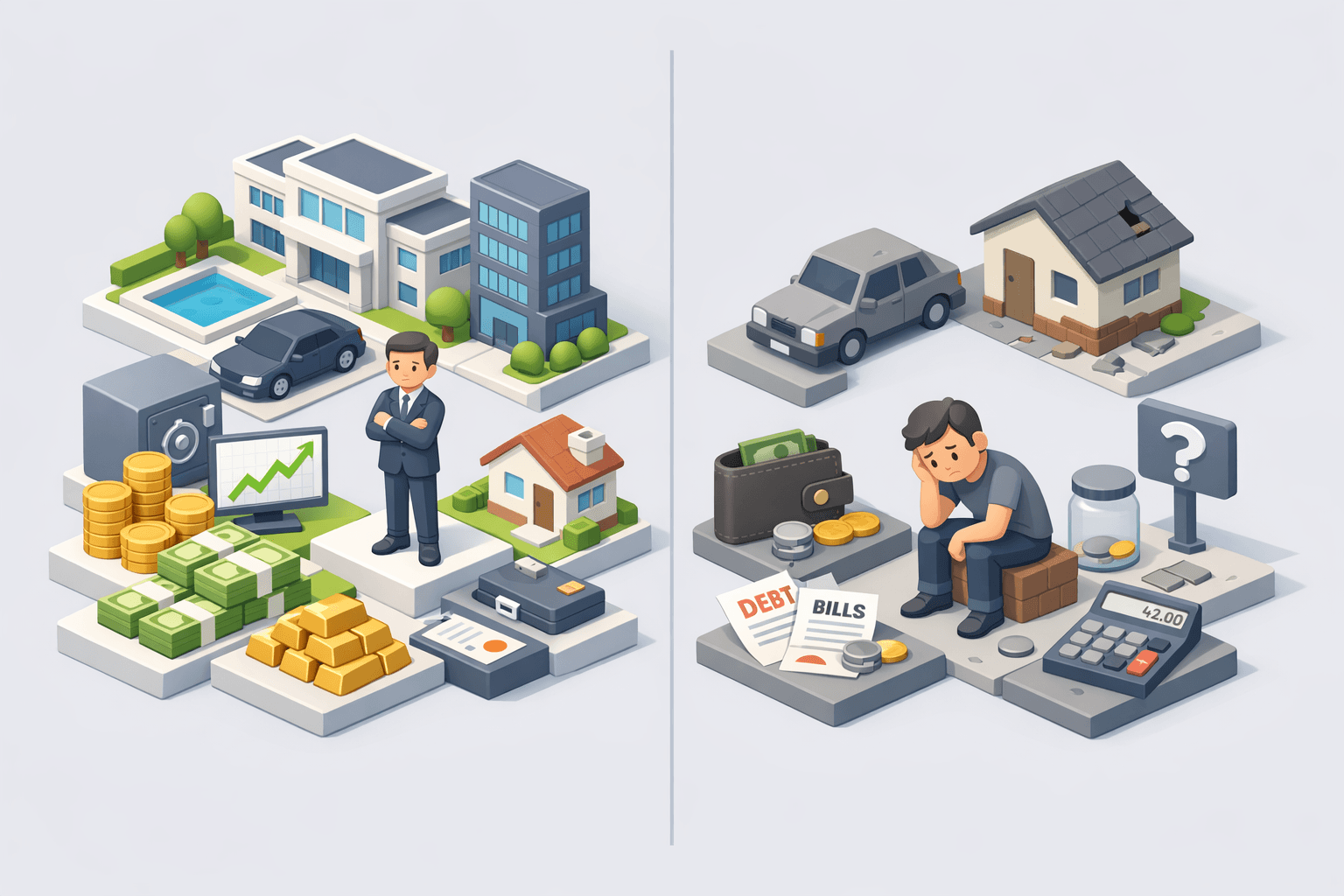
This was the part that gave me chills.
"In an inflationary system, saving becomes foolish. The value of money keeps getting eroded. The rational strategy is to borrow and buy real assets. Those who already own real estate or stocks see their wealth grow automatically as the money supply expands and asset prices rise."
Those with no assets and only a salary must enter the market after those prices have already surged.
The authors argue this is not simply an economic phenomenon. Bad money distorts people's time preferences. Since saving for the future is no longer rewarded, people increasingly shift toward short-term, immediate consumption. The authors contend this leads to moral fatigue across society. "Bad money makes people progressively more dependent, short-term oriented, materialistic, and depressed" — that sentence closes chapter six.
It made me wonder whether this is one of the root causes of why society has become so harsh, why everyone feels so anxious.
Disheartening — but doesn't it all make sense now?
How capitalist society is systematically making you poorer.
So what are you supposed to do?
There's no perfect answer. But there are directions.
- Don't go all-in on wage income → Your paycheck can't outpace inflation. Diversify your income sources.
- Get on the asset side, even in small ways → Direction matters more than scale. Participate now, even in a tiny way.
- Don't panic — get cold and clear → Cut emotional spending. Understand the rules of the game and hold your ground.
Face reality and find a way to survive it.
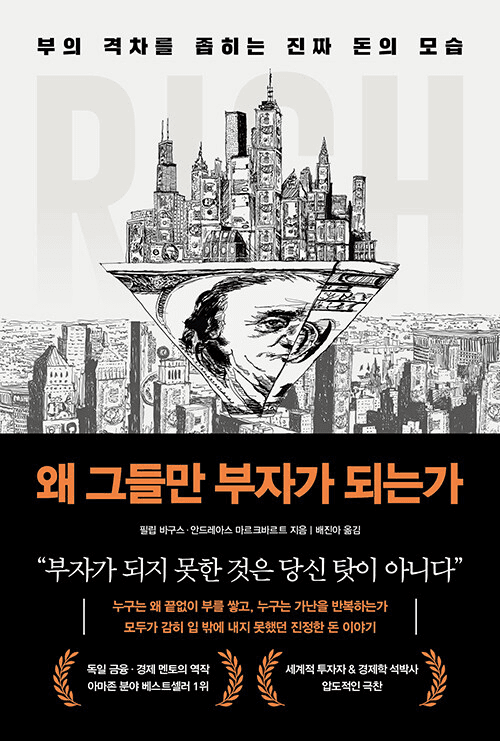
— After reading "Why Only They Get Rich" —