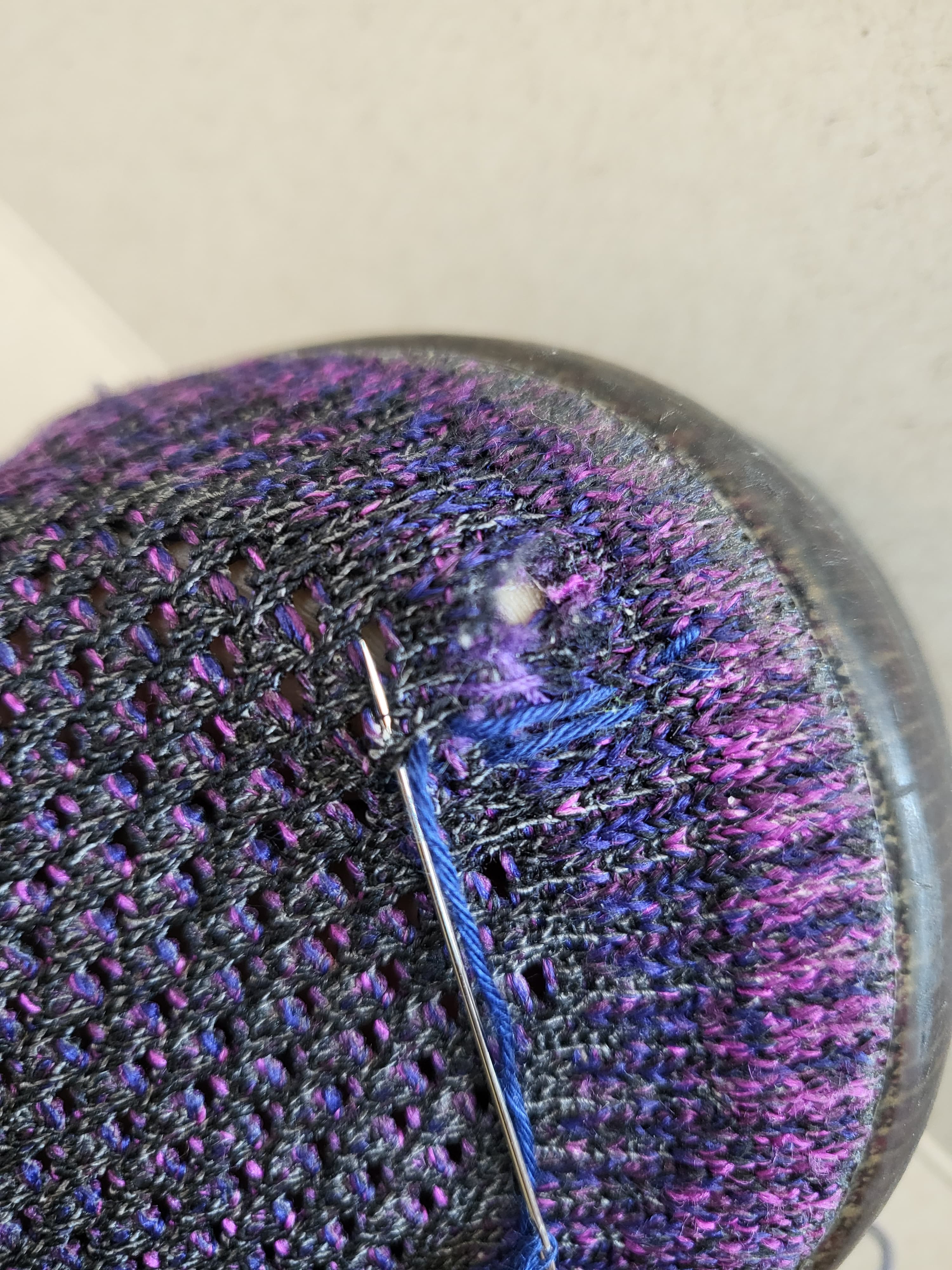
On April 22nd — Earth Day — I was sitting in a workshop in Seongsu-dong, holding a needle.
A new pair of sneakers costs 50,000 won at the supermarket. A few clicks on Coupang and they're at your door the next morning. So why did I deliberately carve out time, match thread colors, and stitch up a hole in my worn-out shoe? The words darning and repair have been circling in my head lately.
What Earth Day Is Really Saying — "Our Power, Our Planet"
This year's Earth Day slogan is "Our Power, Our Planet." The day started in 1970 when 20 million Americans took to the streets, and it's now a global environmental campaign held every April 22nd.
But honestly, every year around this time I feel a kind of pressure. Bring a reusable bag, use a tumbler, sort the recycling properly. All the right things — but something feels hollow. It feels like a one-off event. Then I saw a flyer for a repair gathering at a Seongsu-dong workshop. The idea was to honour the spirit of Earth Day but make something with your own hands. That pulled me in.
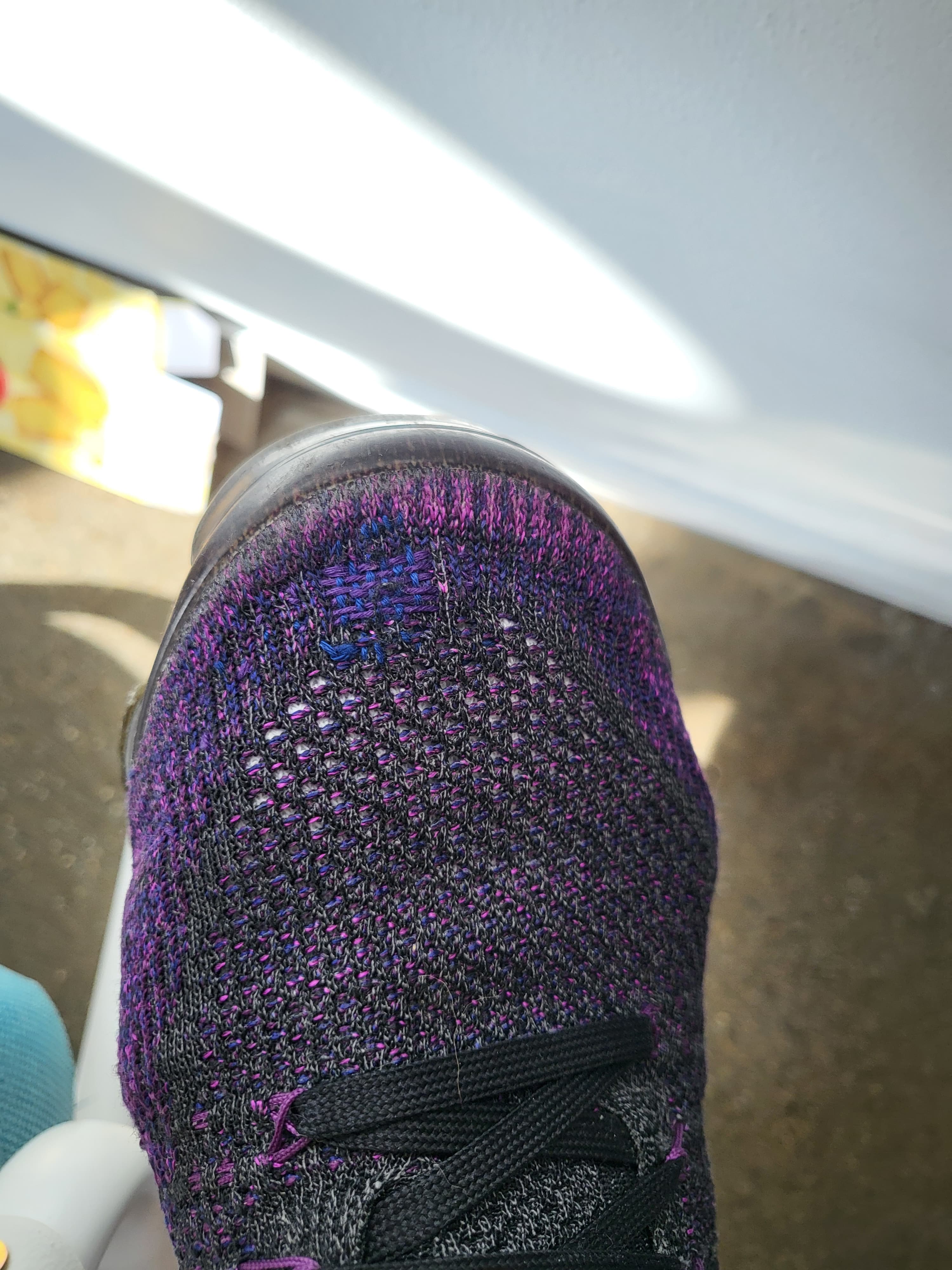
The Hole in My Nike Vapormax — Fixed with Darning
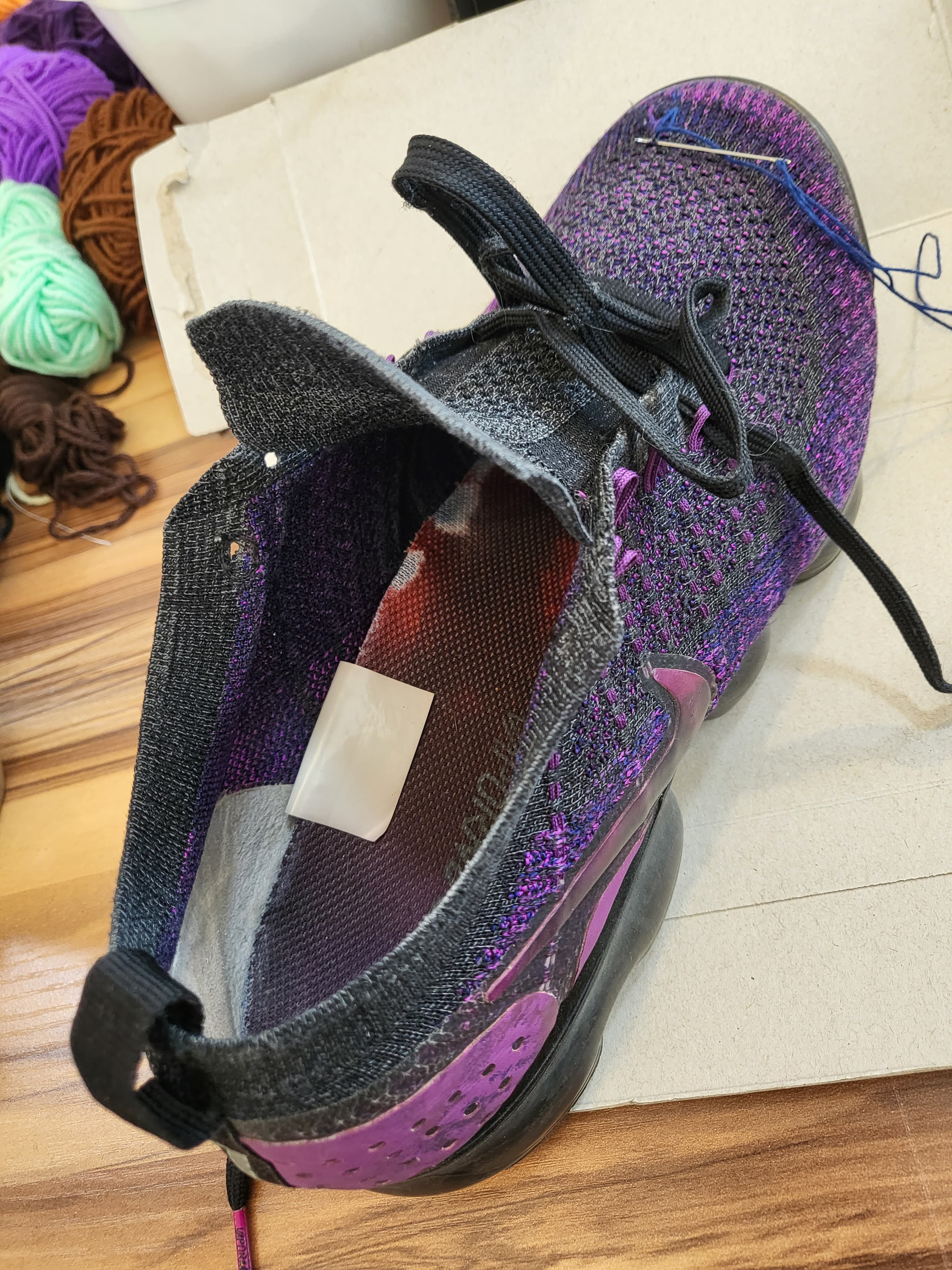
I mostly run and do yoga. I have a separate pair for running — my Nike Air Vapormax is my everyday shoe, and the mesh knit at the toe had developed a hole.
Normally I'd just toss it. Or take it to a repair shop. This time I decided to do it myself.
Darning is a traditional European mending technique. The name literally refers to filling in or weaving over a hole — you carefully cross vertical and horizontal threads to re-weave the fabric. The key is that you're reconstructing the structure of the material. Not patching over it. Actually re-weaving it.
For something three-dimensional like a shoe toe, you insert a rounded stone or wooden ball inside as a base. I used a darning mushroom from the workshop. I matched the thread as closely as I could to the black-purple-blue gradient of the upper. It's not perfect, but it's subtle and the shoe has new life. For a first attempt, it was surprisingly manageable.
Practical tip: Flyknit and knit-upper shoes are great candidates for darning. You can't perfectly match the thread color, so it's better to blend naturally with similar tones. Trying too hard to match exactly tends to look worse.
Buddhamudrā Yoga Pants — Pocket Saved with Blanket Stitch
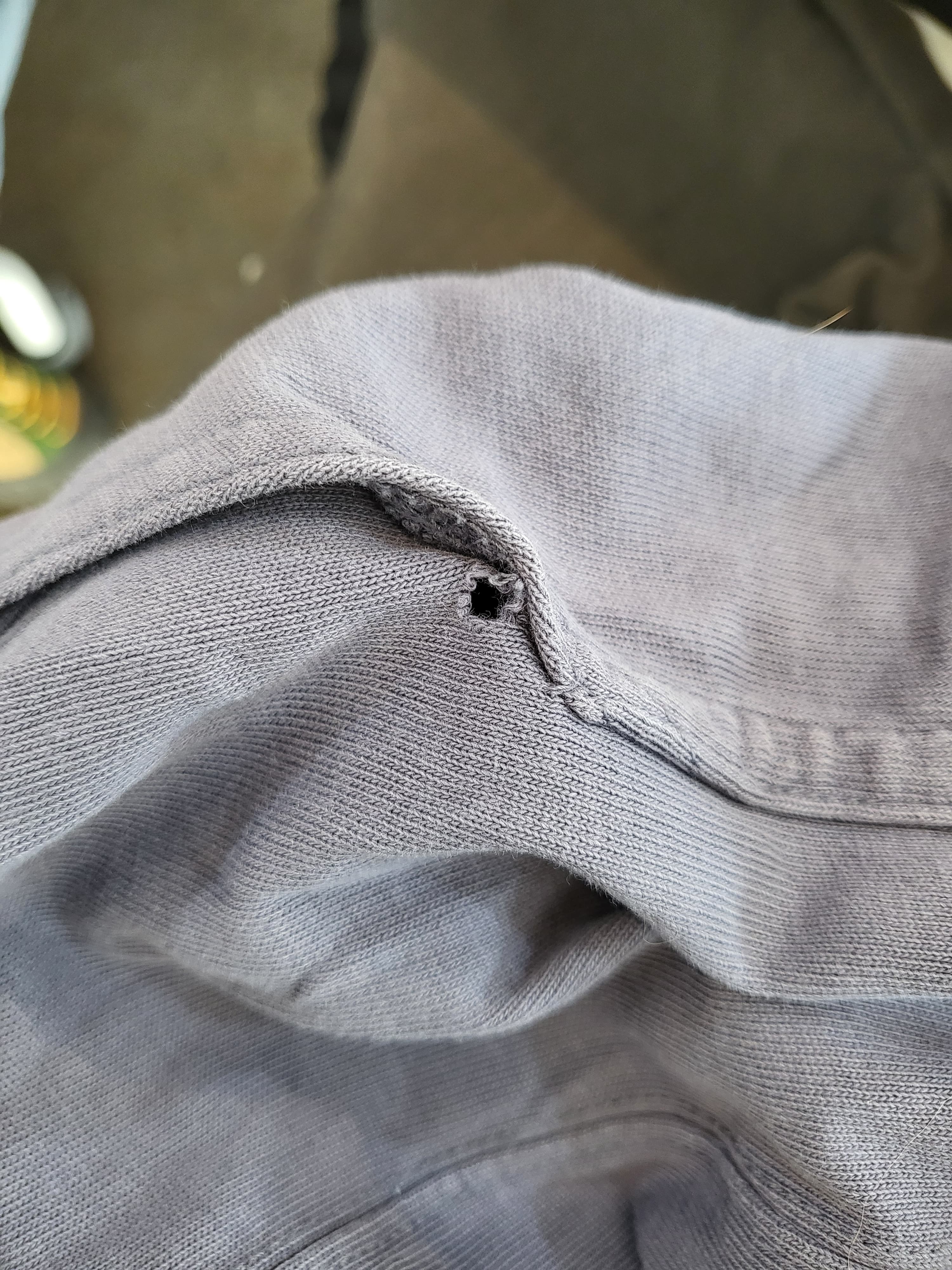
The yoga pants are from Buddhamudrā. My habit of stuffing my pockets like a traveling merchant had put too much stress on the area near the pocket openings, and small holes had formed. It wasn't a clean puncture — more like the threads had come loose and the fabric was beginning to open up.
I handled these with blanket stitch. You loop the thread at regular intervals along the edge of the hole, securing the perimeter firmly. The technique gets its name from how the edges of blankets are finished. Compared to a running stitch or slip stitch, it does a much better job of firmly anchoring the hole's edge.
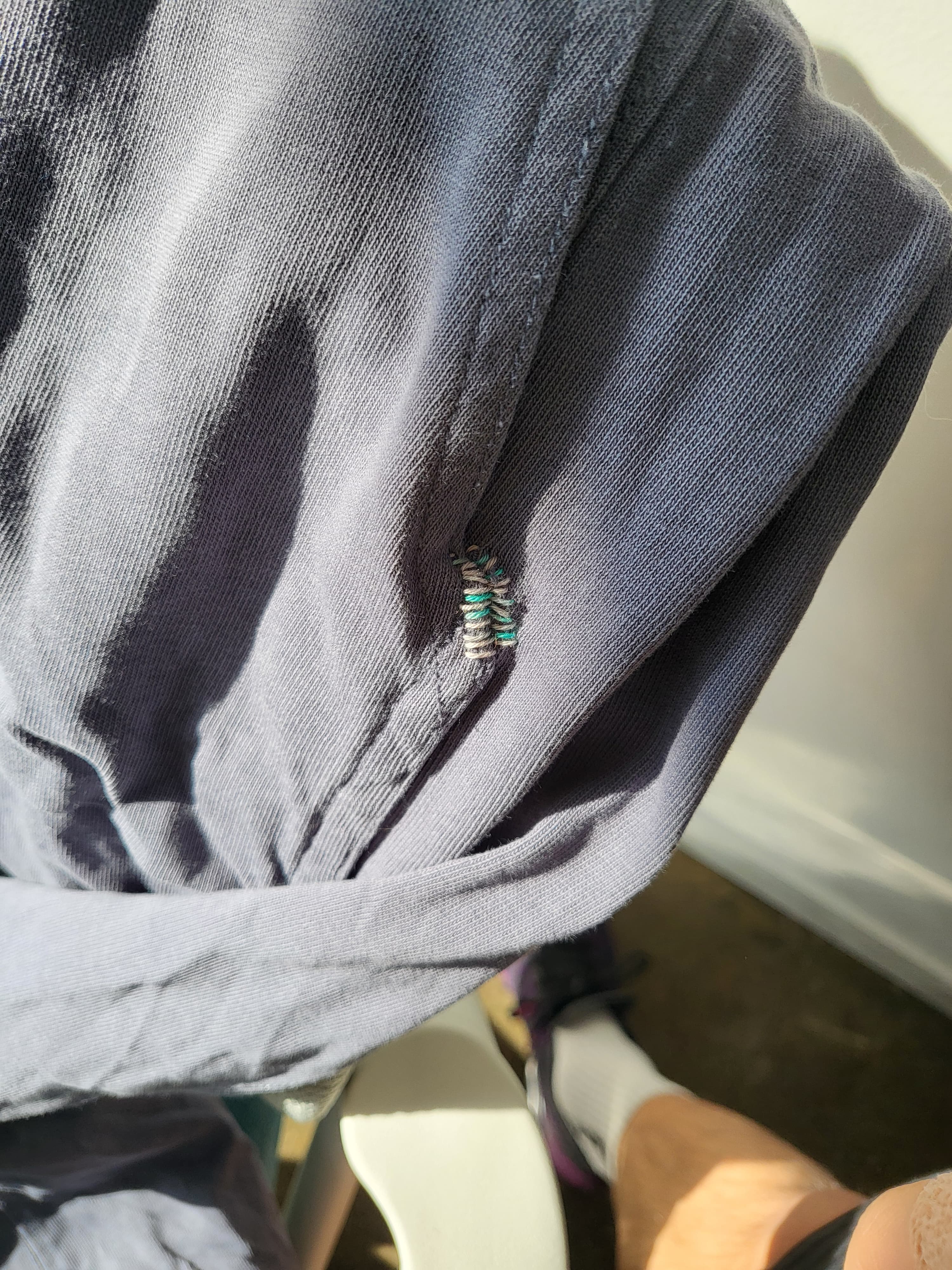
I worked with two threads — white and mint — and ended up with something that reads as a design feature rather than a repair. I'd set out to make it invisible, and accidentally landed on visible mending instead.
Visible mending has been getting attention as part of the circular fashion movement. Rather than hiding repairs, it reframes them as something that carries your personal story and makes the piece uniquely yours. It felt awkward at first, but looking at it when I was done — I didn't mind. If anything, the trace of my own hands makes me more attached to it.
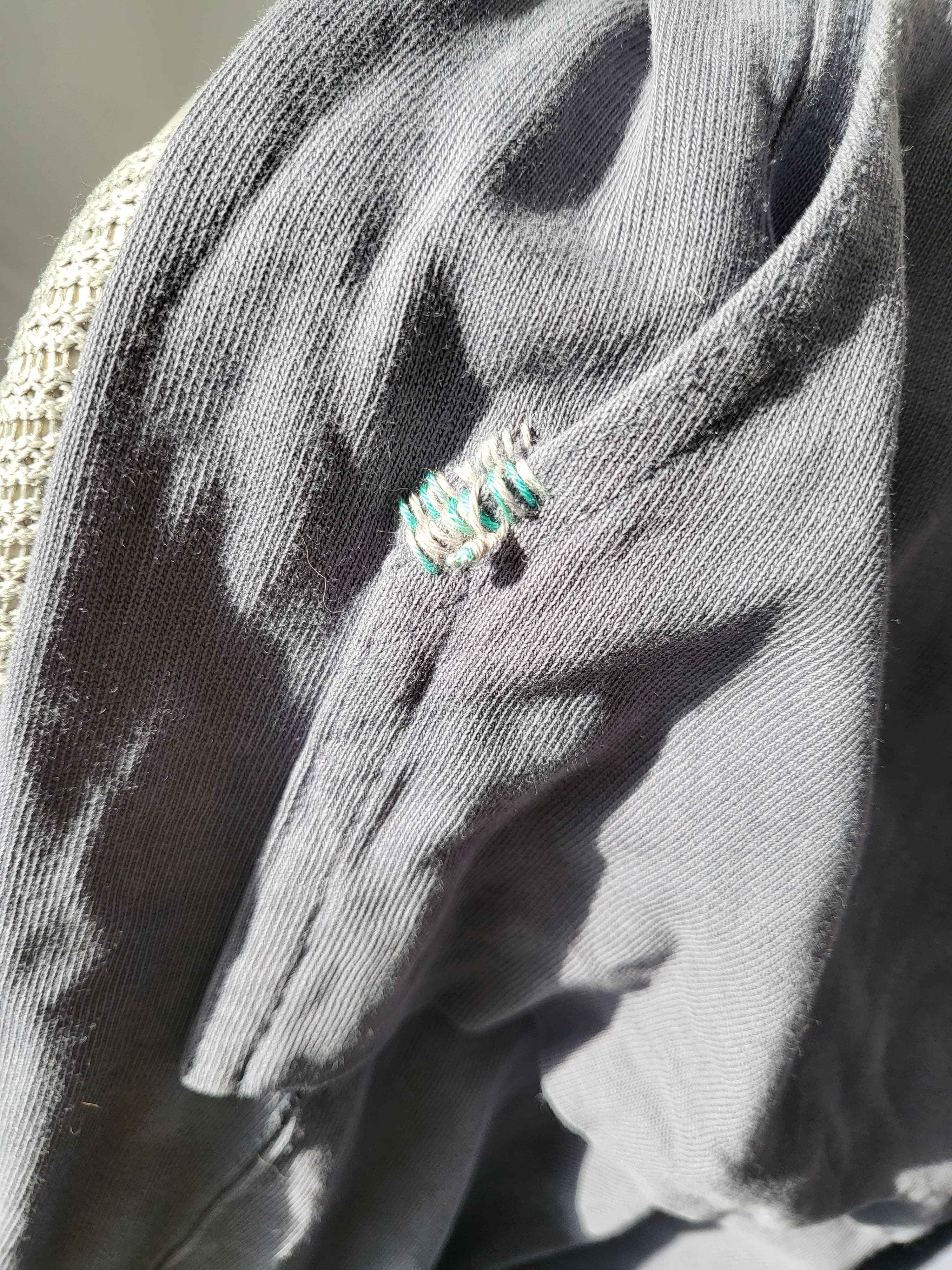
Practical tip: Blanket stitch works especially well for small holes. Keeping consistent spacing is the key — if you mark the intervals with a pencil first, it's much easier to keep even.
I Got Tired of Buying New and Throwing Away
Honestly, it feels a bit much to say I did all this purely for the environment. That was the spirit of the gathering, and I do connect with it — but if I'm being more truthful:
I'd grown exhausted by the cycle of buying easily and discarding easily. Something has shifted in me recently. I want to commit to the things I buy. Especially sports gear — I've calibrated these pieces to my body over time, and there's no easy substitute.
We form relationships with objects over the course of our lives, and those objects accumulate into memory. There are days I walked around in these Vapormax. There are yoga classes I went to in those pants. There's no rush to erase those traces.
The thought that stayed with me longest in that workshop was this:
This shouldn't feel like a special occasion.
What if repair wasn't something only people who care deeply about the environment do — but just the natural routine of people who hold onto things? Not a one-time Earth Day event, but a way of living. I plan to keep using repair to give my belongings more life. And honestly, I'm a little curious about what gets a hole in it next.