
Low birth rates, an aging population, economic stagnation — these are the defining headlines of our time.
But what if all of these trends are moving inside a single, much larger structure? No Ordinary Disruption, written using 25 years of McKinsey Global Institute data, lays out that structure with striking clarity.
The most remarkable thing? The book was published a decade ago — yet reading it today feels like reading tomorrow's news.
Four Mega-Trends
1. The Gravity Shifts Back to Asia

Historically, China accounted for roughly one-third of global GDP. That center of gravity moved to Europe and then to the United States — and now it is moving back to Asia.
The key is speed. Urbanization in the developing world is happening 10 times faster and at 300 times the scale of the Industrial Revolution. Multiply scale by speed and the total force of disruption is 3,000 times greater. The title is not hyperbole.
2. Falling Birth Rates — Understanding the Structure
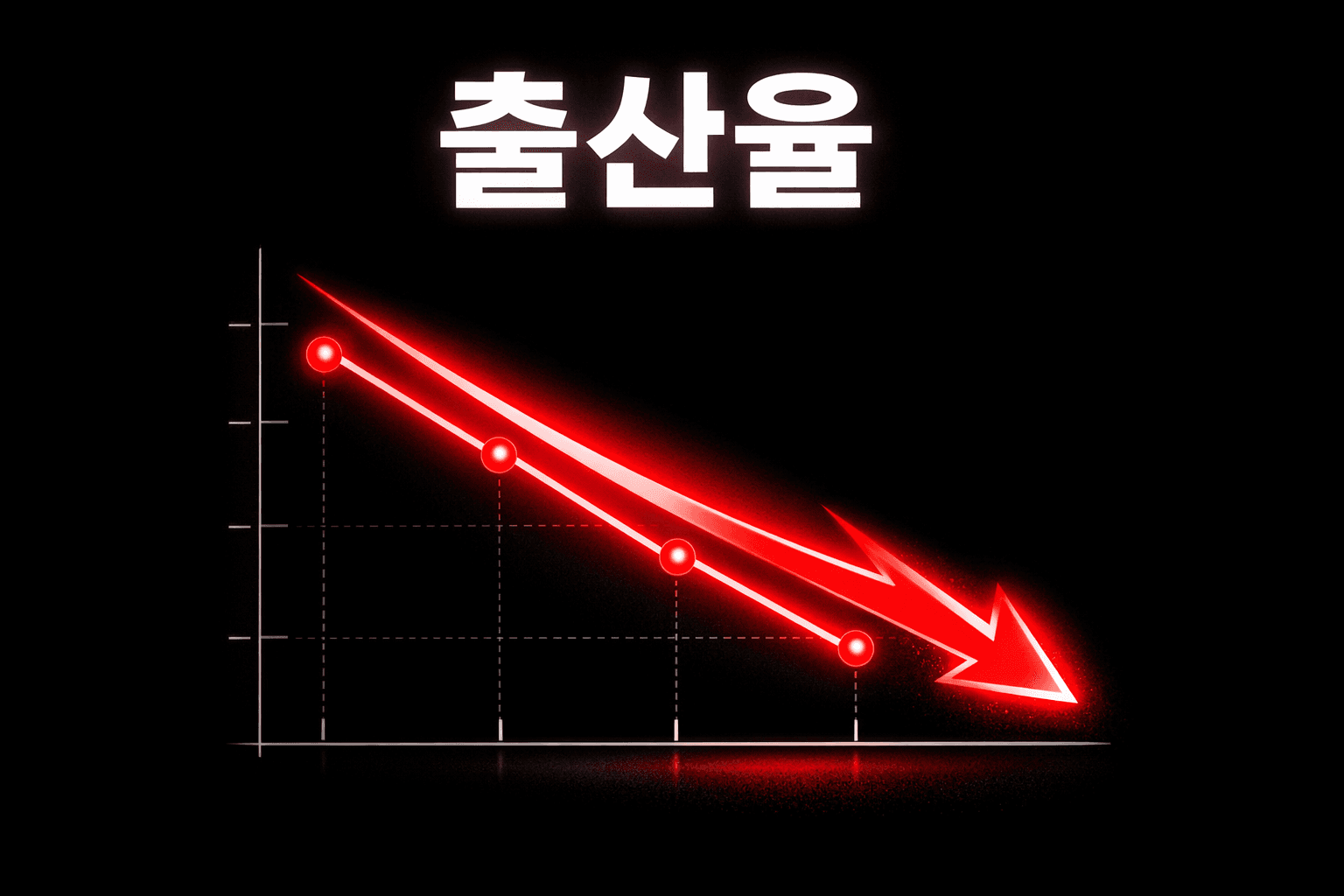
Once urbanization accelerates, falling birth rates are not a policy failure — they are structurally inevitable. Rising costs of raising children, greater female economic participation, and higher education levels all work together to push birth rates down.
The authors call this the "paradox of aging": humanity's greatest achievements — better education, more opportunity — create the very workforce shortages and pension crises that now threaten us. It is the side effect of success, not the result of bad choices.
3. Twelve Disruptive Technologies
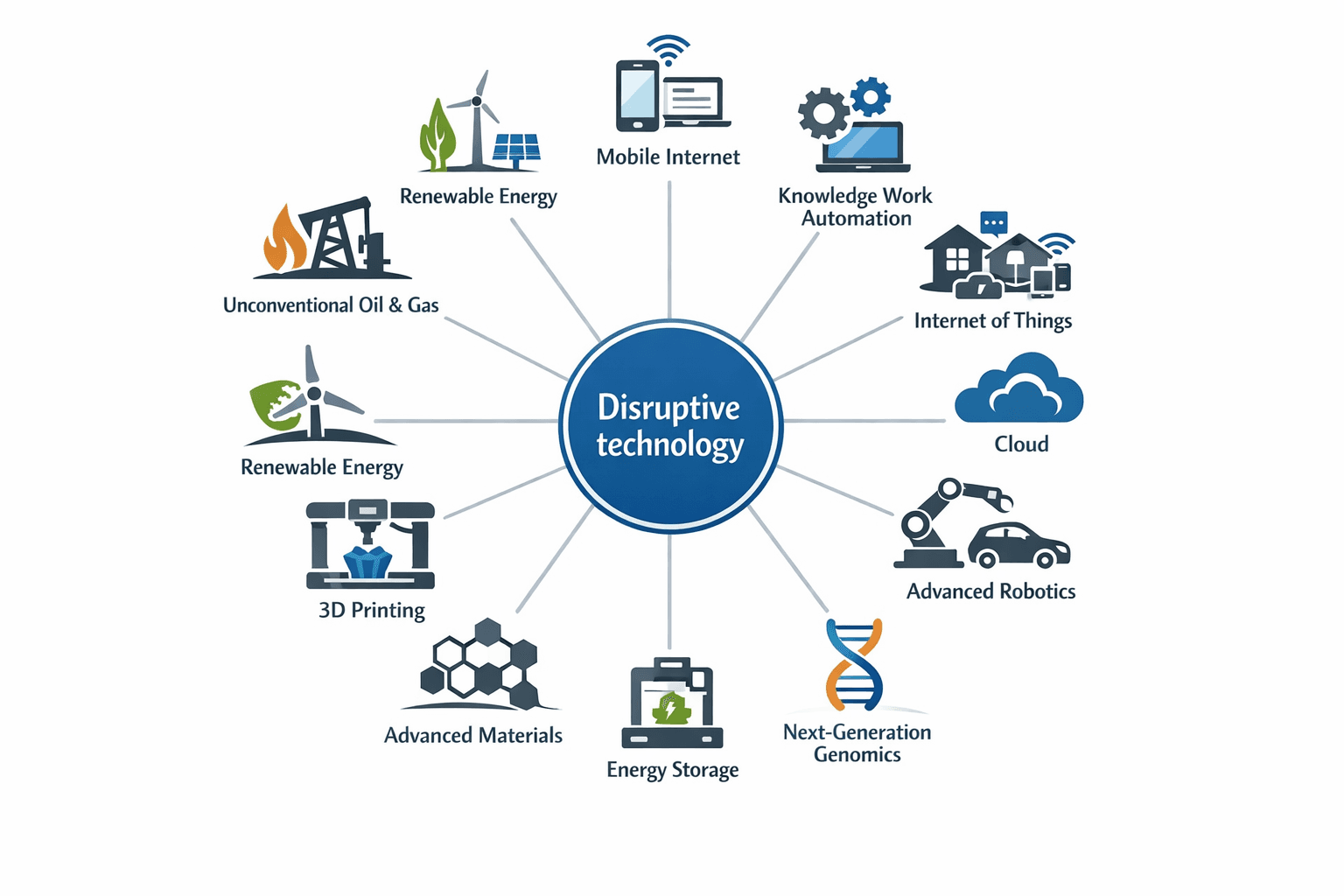
The book identifies twelve technologies reshaping the global economy:
- Mobile internet
- Automation of knowledge work
- The Internet of Things
- Cloud technology
- Advanced robotics
- Autonomous vehicles
- Genomics
- Energy storage
- 3D printing
- Advanced materials
- Unconventional oil and gas
- Renewable energy
What matters most is that these changes are exponential, not linear. Human intuition is calibrated for linear change — which is why exponential disruption always hits harder than anyone expects.
4. An Increasingly Connected World

Trade, capital, people, and data are moving across borders at unprecedented scale. The result: competitors emerge from anywhere, without warning.
The authors' advice stays with me: if you are in your 30s or older, the intuitions you built 20–30 years ago deserve a second look. The mental model of "how the world works" that you formed back then may no longer hold.
What This Book Actually Gives You
The book does not manufacture fear. In fact, understanding the pattern of change tends to reduce anxiety, not increase it.
We fear what we cannot see. Once you understand the structure, better decisions become possible. That is the real message of No Ordinary Disruption.
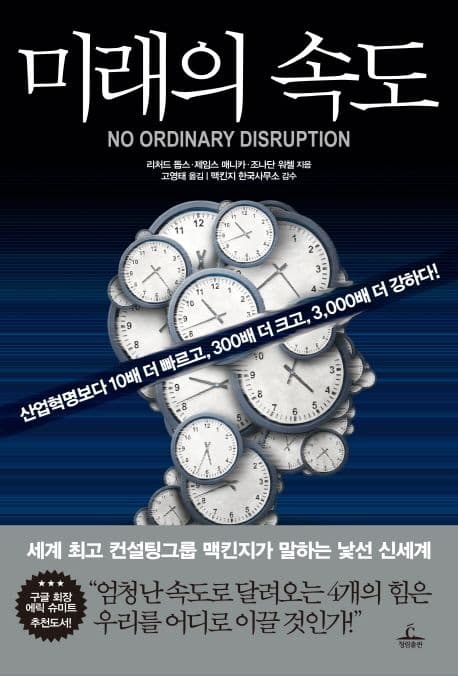
When the market feels unstable and technology seems to be changing faster than you can keep up — this is the book to reach for when you want to see the bigger picture.